By Wenhao Zhu·Updated 2026-11-08·5 min read
Key facts
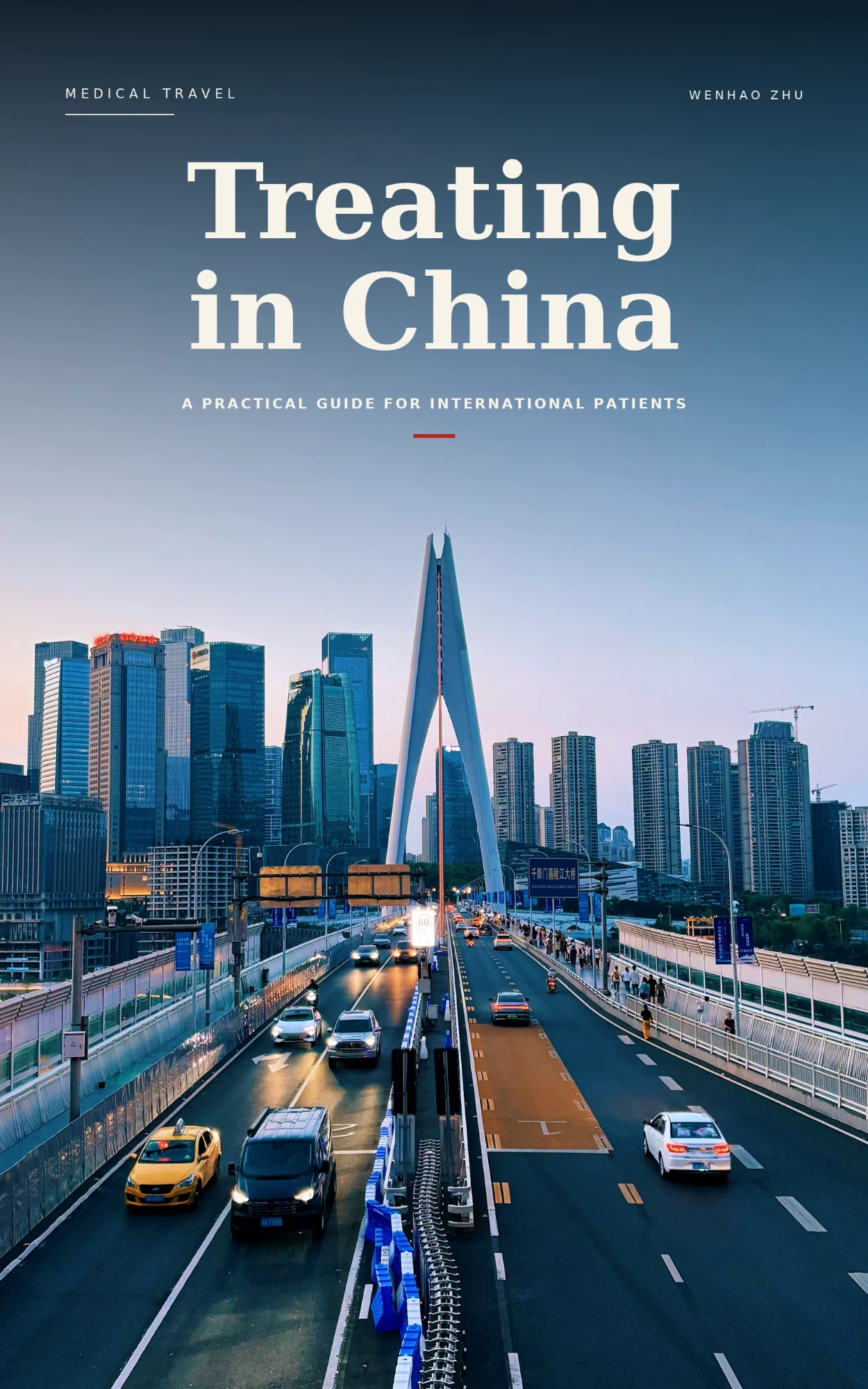
- Treating in China: A Practical Guide for International Patients is a 62-chapter book about how the Chinese medical system actually works, from deciding whether to travel to the day you fly home.
- It was written by Wenhao Zhu, who maintains this site, and is available on Amazon.
- The book describes the practical mechanics — hospital categories, visas, registration, payment, medical records, discharge and follow-up — and contains no clinical advice and no hospital ranking.
- Every chapter ends with concrete actions or checks, and the toolkit in Part Seven is designed to be used on a phone during an appointment or a queue.
- The book is a companion to the free guides on this site; nothing on this site depends on buying it.
Most people planning treatment abroad do not need more encouragement. They need a clear account of what the system will ask of them, in the order it will ask it — and an honest statement of the cases in which coming to China is the wrong decision.
That is what this book is. It is a field manual to the Chinese medical system, written for international patients and the family members who do the research with them, and published on Amazon.
Why we wrote this book
Readers of this site tend to ask the same questions in a different order: which hospital, how much, how long, which visa, what to bring. Each of those has a short answer here, but the answers only make sense together — a visa depends on the treatment plan, the deposit depends on the hospital category, and the discharge paperwork decides whether an insurance claim succeeds months later.
A website is good at answering one question at a time. It is less good at showing a reader the whole sequence before they commit. That is what a book can do: walk through the system in the order a patient actually meets it, and say plainly where the system is slow, frustrating or simply different from what you expect.
The book is independent of this site. It names no physician, ranks no hospital and sells nothing else. It also tells you when China is the wrong answer — that chapter is in Part One, before any of the practical planning.
What the book covers
The first edition runs to 62 chapters in seven parts and is current as of October 2026. The structure follows the patient journey:
- Part One — Deciding: what Chinese medicine is good at, the five kinds of hospital, verifying a hospital or a doctor, costs and budgets, second opinions, intermediaries, insurance, visas, documents and timing.
- Part Two — Arriving: the border and the medication question, phone, money and identity, accommodation, transport and accessibility, interpretation, and the unwritten rules of Chinese clinical culture.
- Part Three — Navigating the System: registration, identity records, an outpatient visit step by step, international departments, admission, payment, drugs, medical records, privacy, emergencies, ward life and discharge.
- Part Four — Risk, Law and Ethics: who regulates what, consent, what to do when something goes wrong, compensation, and the grey zone of scams and brokers.
- Part Five — Living, Family and Aftermath: longer stays, carers, children, food, language, and the weeks after you go home.
- Part Six — City Playbooks: how the system behaves in the cities international patients most often choose.
- Part Seven — The Toolkit: checklists, document templates and a phrase section designed to be shown on a phone screen.
Who it is for
It is written for patients and for the people who travel with them. A diagnosis is rarely a solo event: a spouse, an adult child or a friend usually does the research, holds the folder and asks the questions in the corridor. The book is written so that person can act without a medical background.
It is also useful to coordinators, insurers and employers who arrange care for others, because it describes the same system from the patient side — including the points where paperwork, payment and discharge most often go wrong.
It is not a clinical text. It does not compare treatments, recommend a procedure or interpret your scans. Those questions belong to the physicians who examine you.
How to read it
The book is built to be read in three ways, and the front matter says so plainly:
- Read Part One straight through before you commit. It is written to help you decide against China when China is the wrong answer.
- Once you have decided, read by task. Chapter 17 (registration), Chapter 22 (payment) and Chapter 24 (medical records) account for most of the frustration first-time patients report.
- Keep Part Seven on your phone for the day itself: the checklists and phrases are meant to be read standing in a queue or shown to a clerk.
What the book is not
It is not medical advice, and nothing in it tells you whether to have a procedure, which procedure, or where. It is not a ranking or an endorsement: no physician is named anywhere in the book, and hospitals appear only where a reader needs to know that a category of institution exists.
Prices are ranges, not quotes. Every figure carries the month it was collected, because hospital pricing varies by city, tier, ward type and materials. Policy chapters are flagged with a reminder to verify against the official source before relying on them.
The book is published in English. The free guides on this site are available in English, Simplified Chinese, Arabic and Russian, and are updated independently of the printed edition.
Where to buy it
Treating in China: A Practical Guide for International Patients is available on Amazon. The button below links directly to the listing.
If you would rather start with the free material, the treatment guides on this site cover visas, records, costs, PET-CT and CAR-T in more detail than a single chapter can. Read those first if you are only beginning to research; the book is for the point where you want the whole sequence in one place.
Frequently asked questions
They overlap but are not the same. The site guides are short, topic-specific articles kept up to date online. The book is a single system-level manual that walks through the whole journey in order. Nothing on this site requires the book, and the book does not require the site.
No. The book is an independent publication. Our coordination service and the free guides work exactly the same whether or not you read it.
The first edition is published in English. The free guides on this site are available in Simplified Chinese, Arabic and Russian; translations of the book are not currently available.
No. It explains how to assess a hospital, what to verify and which questions to ask, but it publishes no ranking and names no physician. The choice of hospital and clinician remains yours, made with the physicians who assess your case.
The first edition is current as of October 2026, and policy-sensitive chapters are flagged with a reminder to verify against the official source. The free guides on this site are updated with a last-updated date; for a decision you are about to act on, check the official source as well.